
EPAT Shockwave Therapy · Podiatry
Heal chronic foot pain without surgery
EPAT (Extracorporeal Pulse Activation Treatment) uses FDA-cleared acoustic pressure wave technology to boost circulation and switch your body's own healing back on. It's our go-to for stubborn heel pain that hasn't responded to conservative care.
What it treats
Plantar fasciitis
The classic stubborn heel pain, worst with the first steps of the morning, caused by inflammation of the plantar fascia running from your toes to your heel bone.
Achilles tendonitis
Pain and stiffness where the Achilles tendon meets the heel, common in runners and anyone who suddenly increases activity.
Chronic muscle & tendon pain
Long-standing musculoskeletal pain in the foot and ankle that keeps returning despite rest, ice, and stretching.
What to expect
A short office visit
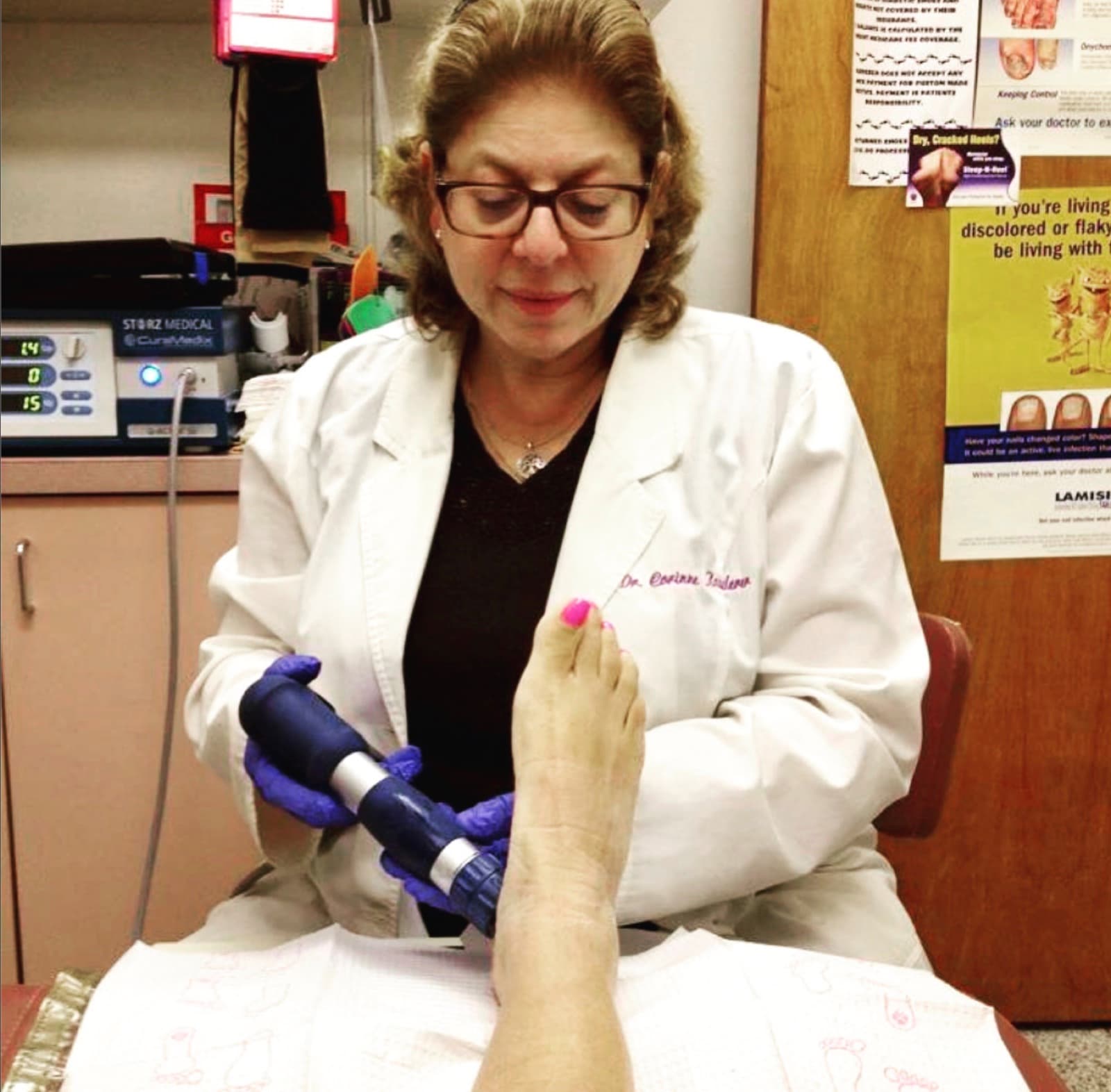
Treatment takes only minutes in our Dyker Heights office. A gel is applied and the applicator delivers acoustic pulses to the painful area.
No anesthesia, no downtime
EPAT is non-invasive: no incisions, no injections, no recovery period. You walk out and go about your day immediately.
A series of sessions
Most patients receive a short series of weekly sessions. Chronic cases sometimes need additional treatments, and some patients return periodically for maintenance.
Does it work?
EPAT is FDA-cleared, and it's the treatment our patients talk about. One of our EPAT patients put it simply: "the excruciating pain I had is practically gone." Dr. Kauderer has used EPAT for years as the non-surgical next step when conservative care (stretching, orthotics, anti-inflammatories) isn't enough.
EPAT is not covered by insurance and is self-pay. Call us and we'll walk you through pricing before you commit to anything.
Frequently asked questions
- Is EPAT shockwave therapy painful?
- Most patients feel only a tapping sensation during treatment. There is no anesthesia and no recovery period, so you can return to your day right afterward.
- How many EPAT sessions will I need?
- Most patients receive a short series of weekly sessions. Chronic cases sometimes need a few more, and some patients return periodically for maintenance. Dr. Kauderer will give you a clear plan after examining you.
- Is EPAT covered by insurance?
- EPAT is not covered by insurance and is self-pay. Call our office and we will walk you through pricing before you commit to anything.
- Who is a good candidate for EPAT?
- EPAT is usually recommended for chronic heel or tendon pain that has not responded to conservative care such as stretching, orthotics, ice, and anti-inflammatories.
Tired of pain that keeps coming back?
Call our Brooklyn office and ask whether EPAT is right for your heel or tendon pain.